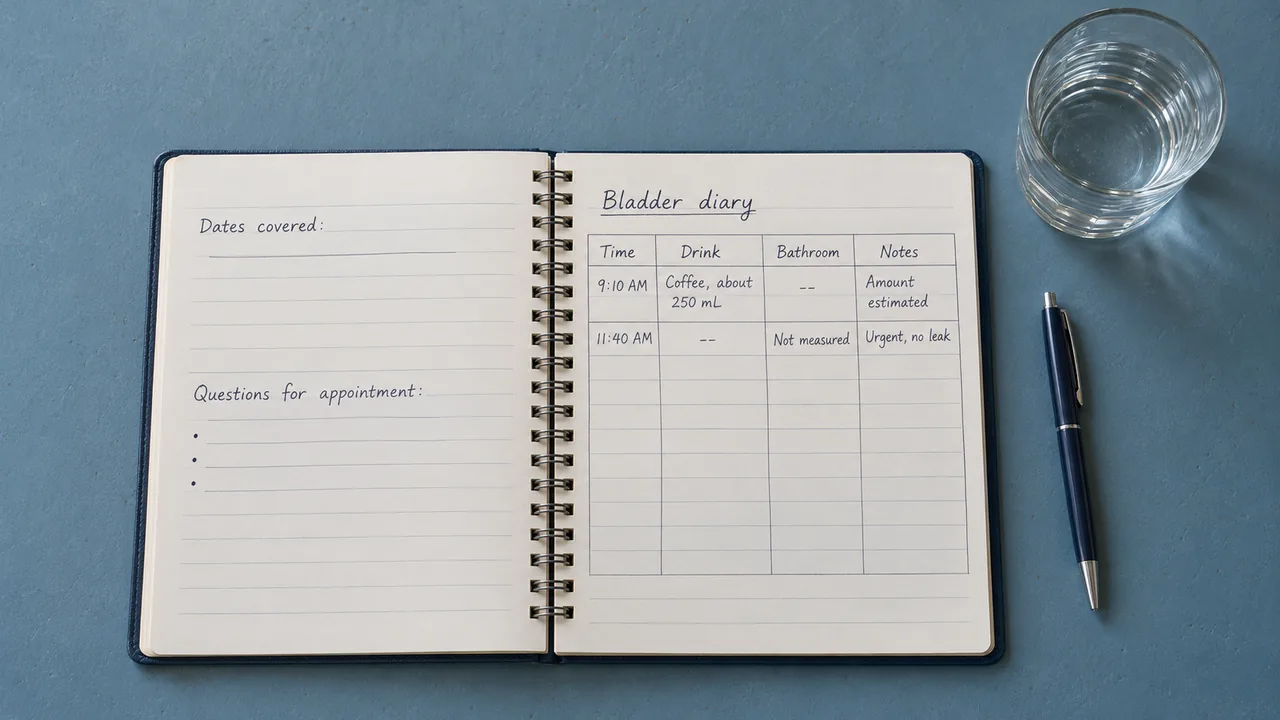
Pain can be hard to reconstruct after the day has moved on. A short diary preserves where it hurt, how it felt, when it changed, and what you could or could not do at the time. That record gives you a clearer timeline for personal review or a clinician conversation, but it cannot identify the cause of pain by itself.
Record Where, When, and How It Feels
Start with the date, approximate start time, and location. Be specific enough to distinguish one area from another, such as the outside of the right knee, the lower back, or the left wrist. If pain spreads, note where it began and where you felt it later.
Describe the sensation in your own words. You might write aching, burning, cramping, pressure, sharp, stabbing, throbbing, or tingling. MedlinePlus notes that a clinician may ask about location, duration, sensation, frequency, timing, relief, severity, and daily impact. Plain descriptions are useful even when you do not know which medical term fits.
Add whether the pain was constant, came in waves, or appeared only with a particular movement. Record an end time when you can. If it was still present at your last check-in, write that rather than guessing how long it lasted.
Use a Personal Score With a Description
A 1-10 score can help you compare entries when you use it consistently. Pair the number with a short description of what the pain changed. A score of 6 while resting on the couch may represent a different experience from a 6 that stopped you halfway through a walk.
Your score is a personal observation, not a clinical measurement. There is no need to match someone else's idea of a 4 or an 8. Define a few anchors that make sense to you, then keep those anchors stable enough to compare one day with another.
Add the Activity and Position Around the Pain
Write what you were doing when the pain began or changed. You may have been sitting, standing, lifting, walking, driving, working at a desk, cooking, or waking from sleep. Include the position of the painful area when that detail seems useful.
Record what happened naturally. Do not repeat a painful movement to test a theory for the diary. If a task felt unsafe, stop the task and deal with the immediate situation first.
Track Daily Impact Alongside Intensity
Note the ordinary activity affected by the pain. Did you change how far you walked, take longer to get dressed, leave work early, avoid stairs, wake during the night, or ask someone else to finish a task? This gives the score practical context.
Function also helps you notice a change that the number alone might miss. The CDC's pain guidance discusses expected benefits for both pain and function. A diary can keep those two observations separate: how strong the pain felt and what it allowed you to do.
Write Down Medicines and Other Steps
If you took a medicine, record the exact name, dose, and time from the label or your instructions. At your next normal check-in, note what changed and what did not. Include any recent start, stop, or dose change that happened under your care plan.
Do not change a medicine or take an extra dose to test an idea from the diary. If you are keeping a closer medicine timeline, the guide to tracking possible medication side effects separates timing from assumptions about cause.
You can also record non-drug steps you actually used, such as rest, a change in position, heat, ice, stretching, or another step already included in your care plan. Write what happened afterward without turning one better or worse moment into a conclusion.
Use the Same Pain Diary Fields Each Time
A repeatable entry can stay short:
- Date and start time
- Body location and whether the pain spread
- Sensation in your own words
- Personal 1-10 score
- Duration or frequency
- Activity and position
- Effect on movement, sleep, work, or another daily task
- Medicine or other step taken, with time
- What changed by the next check-in
The American Chronic Pain Association provides a printable pain log if you prefer a paper format. A digital tracker can make repeated fields easier to compare, while a paper log may be more convenient in some settings. The practical difference between a focused tracker and a broader journal is covered in Symptom Tracker vs. Health Journal.
Review Patterns Without Assigning a Cause
After several entries, group them by location, usual time, activity, duration, and daily effect. You may notice that pain often followed a long drive, appeared on poor-sleep days, or eased after you changed position. Treat that pattern as a question. The diary shows sequence and repetition, not proof that one detail caused another.
Look for exceptions as well. If the same activity sometimes happened without pain, keep that information. It can prevent a neat story from replacing the fuller record.
Prepare a Short Appointment Summary
Before an appointment, summarize the date range, number of pain days or episodes, common locations, usual score range, frequent descriptions, and the activities most affected. Add the medicines or care steps you recorded and two or three questions you want to discuss.
Bring a few representative entries rather than reading every line. The guide to tracking symptoms before a doctor appointment explains how to turn a longer log into a focused conversation.
Know When the Diary Can Wait
Tracking should not delay urgent help. If pain comes with a medical emergency, a serious injury, or symptoms that concern you, follow appropriate local medical guidance first. You can record the details later if and when it is safe to do so.
Use Baseline for a Consistent Pain Diary
Baseline lets you create a tracker for the details you want to repeat, such as pain intensity, movement, sleep, or daily impact. Add a personal 1-10 score and a note with the location, sensation, timing, activity, and medicine details that matter to your record.
Timelines and charts help you review recorded changes. Baseline can also prepare a text summary or CSV export from your check-ins. You decide whether to save or share a copy, and your core symptom entries stay on your phone unless you choose to export or share them. See the Baseline symptom tracker page for current app details and the privacy policy for information about entries, exports, and backups.
Sources