A bladder diary records when you drink, when you pass urine, and any urgency or leakage. Keep the times, amounts, and surrounding circumstances together so you can describe what happened at an appointment. You do not need to explain the cause of a change or choose a diagnosis before starting.
Choose a Recording Period With Your Clinician
The National Institute of Diabetes and Digestive and Kidney Diseases (NIDDK) suggests keeping a bladder diary for two to three days before a visit. The NHS says a GP may request at least three days. Follow the period and format your clinician asks for rather than treating either suggestion as a deadline for seeking care.
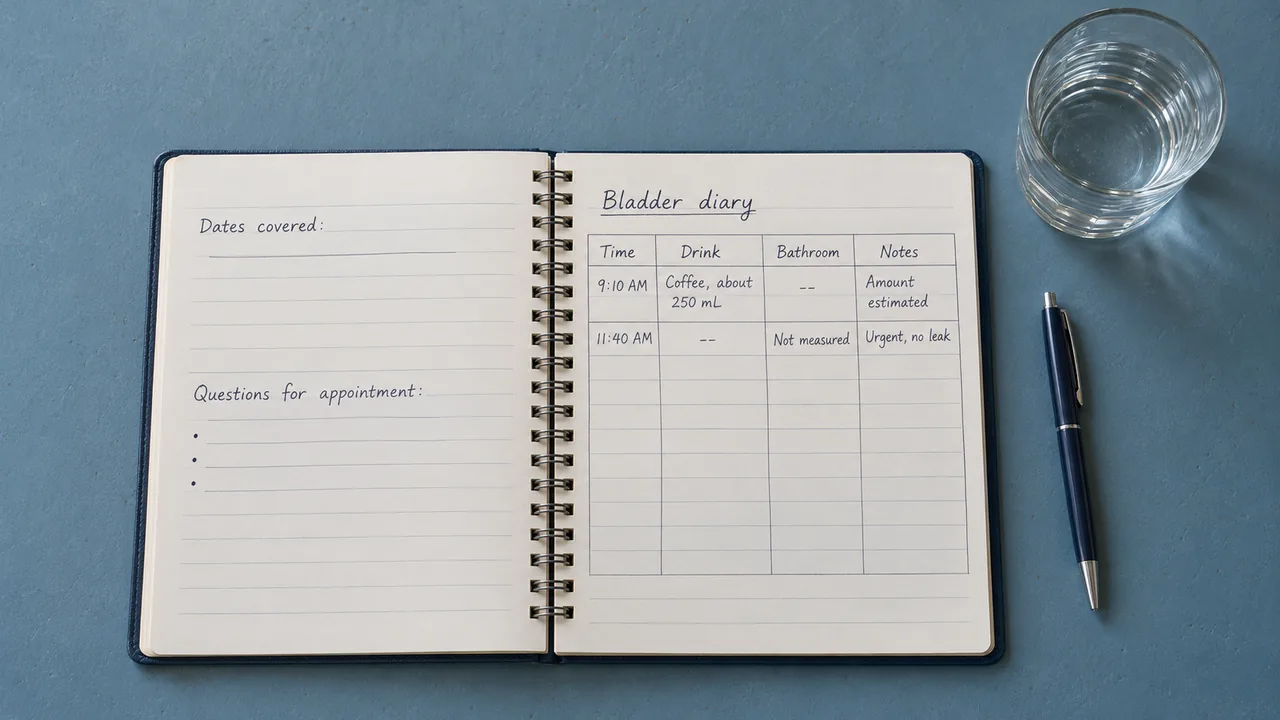
Write the start and end dates at the top. Note whether the record includes workdays, days at home, or a different routine. If you can record only part of a day, label that interval. An incomplete day should not look like a full day with unusually few bathroom visits.
Keep Drinks and Bathroom Visits on One Timeline
NIDDK's diary fields cover what, when, and how much you drink; when and how much you urinate; leaks; urgency before a leak; and what you were doing when it happened. Use separate entries for drinks and bathroom visits instead of trying to pair each drink with a particular trip.
Drinks
Record the time, type of drink, and amount. Use the same units throughout, such as milliliters or fluid ounces. If you record a cup or mug, note its size when you know it. Mark an amount as estimated when you have not measured it.
A note such as "9:10 a.m., coffee, approximately 250 mL" preserves the information without claiming that the coffee caused a later symptom. Keep your usual routine unless your healthcare professional has given you different instructions. The diary is not a reason to experiment with drinking less or holding urine.
Bathroom Visits
Record each visit's time. If your clinician has asked you to measure urine, follow their collection instructions and record the amount with its unit. Otherwise, ask whether measured volumes are needed. Do not replace a missing measurement with a precise-looking guess.
Distinguish a trip that produced urine from an unsuccessful attempt. Add difficulty starting or a feeling that you still needed to go if that is what you experienced. The NHS lists difficulty passing urine and daytime or nighttime frequency among the questions a GP may ask.
Record Urgency and Leakage Separately
An urgent need to use the toilet and a leak are different entries. The NHS diary guidance includes counts of each. Write whether you felt urgency, whether a leak happened, and whether the two occurred together.
For a leak, add the activity at the time, such as coughing, laughing, walking, or sitting. Use an ordinary description of the amount if you did not measure it. "A few drops" is more transparent than an invented volume. If you choose personal labels for urgency, define them at the beginning and use them consistently. They describe your experience, not a clinical measurement.
You can keep the note brief: "2:20 p.m., sudden urge while walking home; reached toilet; no leak." A separate leak entry might say, "4:05 p.m., a few drops when coughing; no urgent feeling beforehand." These are fictional examples of how to separate observations, not explanations of why either event occurred.
Make Overnight Entries Clear
Use dates as well as times around midnight. Record when you went to bed and when you got up for the day so an overnight trip does not disappear between two daily pages. If you were already awake before deciding to use the bathroom, write that rather than assuming the need to urinate woke you.
Leave uncertain times visibly approximate. "Around 3 a.m." is an honest entry. If you remember only that you got up but cannot recall the time, keep that detail without reconstructing a schedule you do not remember.
If you are also recording sleep, the sleep and symptom diary guide provides a way to keep bedtime, awakenings, and daytime notes together. You do not need a second complete account of the same night.
Use a Short, Repeatable Entry
This fictional format separates a measured amount from a symptom description:
- Date and time: Monday, 11:40 a.m.
- Event: bathroom visit.
- Urine amount: not measured.
- Urgency: strong need just before the visit.
- Leakage: none noticed.
- Context: paused a work call to use the bathroom.
Keep drink entries in the same chronological record. Add a separate note for an event you remember later, identifying both the event time and the fact that you entered it afterward. If you missed several hours, mark the gap. Do not count unrecorded hours as hours without symptoms.
Prepare a Summary Without Setting a Normal Target
Before the appointment, list the dates and hours covered, the bathroom visits recorded, urgent episodes, leaks, and overnight trips. Count only the intervals you actually recorded. Keep measured volumes separate from estimates and descriptions.
Choose a few entries that show the concern you want to discuss. You might ask, "I often stopped conversations to get to the bathroom, but sometimes had urgency without a leak. Which details should I record next?" Bring your medicine list as well; the NHS includes current medicines among the history questions a GP may ask.
A count is a description of your record, not a target or diagnosis. Do not use someone else's diary to decide how often you should urinate. Your clinician can review the record alongside your history and any examination or tests. For broader visit planning, see appointment preparation guide.
Know When Recording Should Wait
NIDDK advises getting medical help right away if you cannot urinate or have severe abdominal pain. Do not wait to finish a recording period. The NHS advises urgent assessment for suspected blood in urine, even if there is only a small amount or you are unsure it is blood. Contact an appropriate local healthcare service; NHS service numbers apply to the UK.
Keep the diary available for a conversation, but let getting help take priority over completing it.
Sources