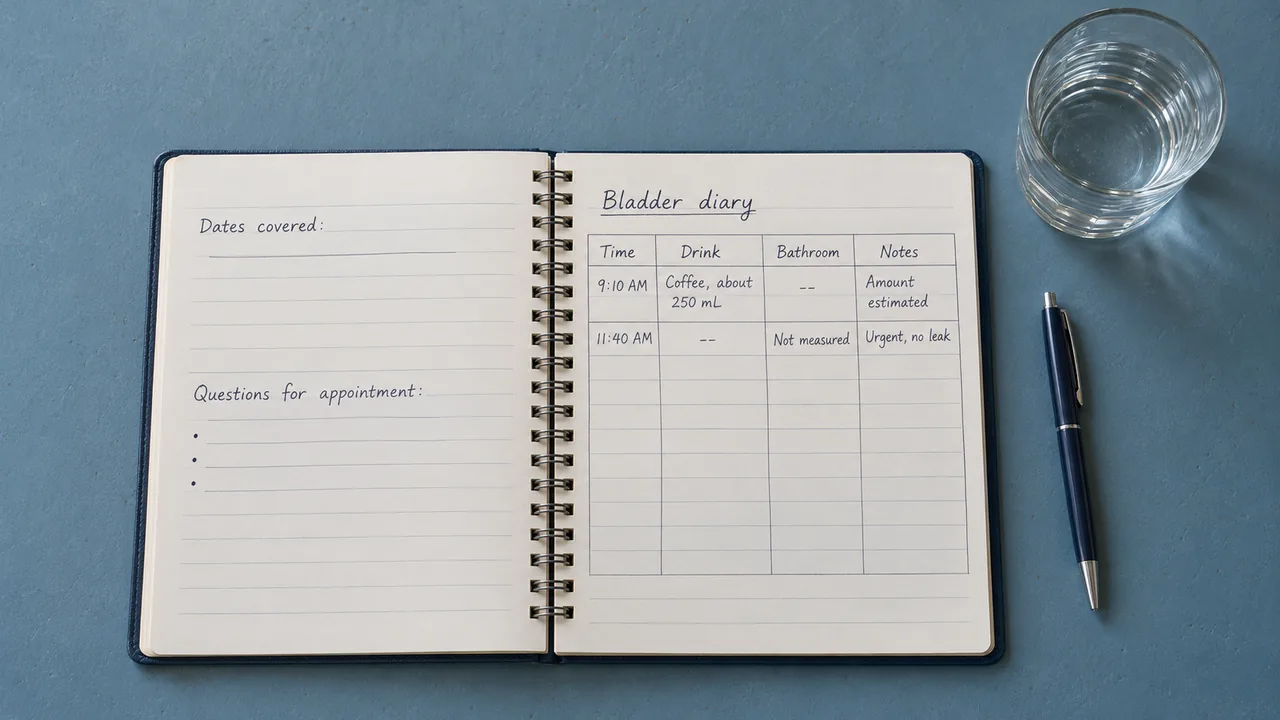
Sleep and daytime symptoms can be difficult to reconstruct from memory. A short diary puts them on the same timeline, so you can see what happened first, what changed, and which details you may want to discuss with a clinician. The timeline can reveal a sequence, but it cannot show that poor sleep caused a symptom or that a symptom disrupted sleep.
Choose a Small Set of Details
Start with information you can record consistently. The National Heart, Lung, and Blood Institute sleep diary includes sleep quality and quantity, medicines, alcohol, caffeinated drinks, and daytime sleepiness. The CDC also suggests recording bedtime, nighttime wake-ups, morning wake time, naps, exercise, alcohol, caffeine, and medicines.
You do not need every field on the first day. Pick the details that match your question. If morning headaches are the concern, you might record bedtime, wake-ups, wake time, the headache's time and intensity, and any note that seems worth remembering. For fatigue, daytime sleepiness and naps may be more useful.
Record Sleep and Symptoms on the Same Timeline
Use the same check-in window each day when practical. A morning entry can capture the previous night while it is still fresh. Add symptoms that are present when you wake, then record later changes when they happen.
For example: "Tuesday: in bed at 10:45 p.m.; awake twice; up at 6:30 a.m.; headache 3/10 on waking; eased by lunch." A 1-10 rating is a personal observation, not a clinical measurement. Its value comes from using the scale in a consistent way and pairing the number with a brief note.
If you need a simple structure for those notes, the guide to tracking symptoms before a doctor appointment covers timing, intensity, and context. Keep long-term facts such as diagnoses, allergies, past procedures, and medicine lists in a broader record. Our comparison of a symptom tracker and health journal explains where each kind of information fits.
Keep Observations Separate From Conclusions
Write down what you observed before interpreting it. "Slept five hours and felt nauseated at 9 a.m." preserves two facts. "Five hours of sleep caused nausea" adds a conclusion that the diary cannot establish.
Context can still help you prepare useful questions. Note a schedule change, late meal, exercise, caffeine, alcohol, or medicine when it is relevant to your goal. Try not to add so many fields that the diary becomes difficult to maintain. Blank days should stay blank rather than being treated as symptom-free days.
Review the Diary for Better Questions
After several entries, review the sequence instead of searching for a verdict. Look for repeated timing, changes from your usual routine, and gaps in the record. You may notice that a symptom often appears on waking, that sleep was interrupted on the same nights, or that the entries are too incomplete to compare.
Turn those observations into questions: "Could this medicine affect my sleep?" or "What should I record when I wake with a headache?" MedlinePlus advises seeing a health care provider for continued trouble sleeping. Bring the diary if it helps you describe what has been happening.
Use Baseline for a Quick Daily Record
Baseline lets you create a tracker for sleep and the symptoms you want to follow. You can add personal 1-10 scores and notes, then review the recorded changes in timelines and charts. A chart can help you prepare a question, but it does not identify a cause or provide a diagnosis.
You can also prepare a text summary or CSV export from your check-ins and decide whether to save or share it. Your core symptom log stays on your phone unless you choose to export or share it. See how the app works on the Baseline symptom tracker page, and read the Baseline privacy policy for details about on-device entries, exports, backups, and website data.
Sources