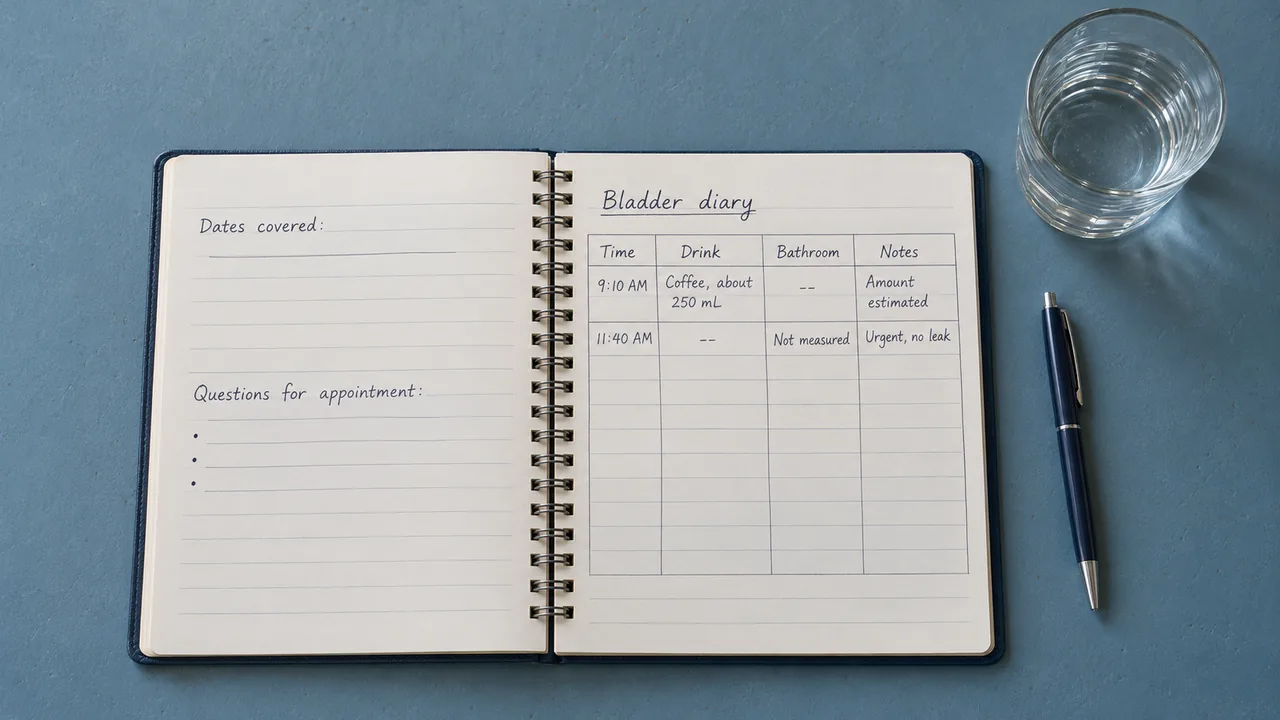
You may have notes about a symptom in one place and a list of past surgeries somewhere else. Both can be useful, but they answer different questions. A symptom tracker helps you remember what has happened lately. A personal health journal holds the broader history you may need over many years.
The American Academy of Family Physicians describes a health journal as a record you keep yourself. It can include illnesses, injuries, medicines, allergies, and family history. MedlinePlus gives a similar list for a personal health record, including test dates and results. Those long-term facts have a different rhythm from a daily check-in.
Keep Long-Term Facts Where You Can Find Them
A health journal is a good home for information you do not want to reconstruct from memory: the name and dose of a medicine, a past procedure, an allergy, or the date of a test. Include dates when you know them. If you are unsure, leave that uncertainty visible rather than inventing a precise date.
Your clinician's medical record is still its own record. A journal you keep can help you gather information from different offices and remember questions, but it may not contain every test result or treatment detail. The familydoctor.org guide suggests asking your doctor's office for records to fill in gaps.
Use a Symptom Tracker for Recent Changes
Think of a symptom tracker as a narrower, more current view. Record what you noticed, when it happened, and any details you want to revisit. For example: "Saturday morning: headache after waking, 4/10, eased by noon." A note about sleep, a new routine, or a medicine change can add context. It does not prove what caused the headache.
That kind of description is useful in a conversation with a clinician. MedlinePlus advises writing down when symptoms started and what makes them better or worse before an appointment. If you need a starting point, our guide to tracking symptoms before a doctor appointment walks through a short entry.
Review Without Trying to Diagnose Yourself
When you look back over a week, notice what is clear and what remains uncertain. Were there several entries about the same symptom? Did it interrupt an activity? Were there days you did not record anything? A gap in the log is a gap, not proof that nothing happened.
Baseline lets you create trackers, add quick 1-10 check-ins and notes, and review timelines and charts. A score is your own observation. It is not a medical measurement, and a chart cannot tell you why a symptom changed. Use the review to prepare a question for a qualified professional if something concerns you.
Share Only What Is Useful
You do not need to hand over an entire journal when a short summary would answer the immediate question. Baseline can prepare a text summary or CSV export from your entries. You choose whether to save or share a copy. Keep your broader history separately, and bring medicine and allergy information when it is relevant to the visit.
Your Baseline check-ins stay on your device unless you choose to export or share them. See the Baseline privacy policy for details about copies, backups, and website data. If you want a simple place for current observations, explore Baseline's check-ins and charts.
Sources