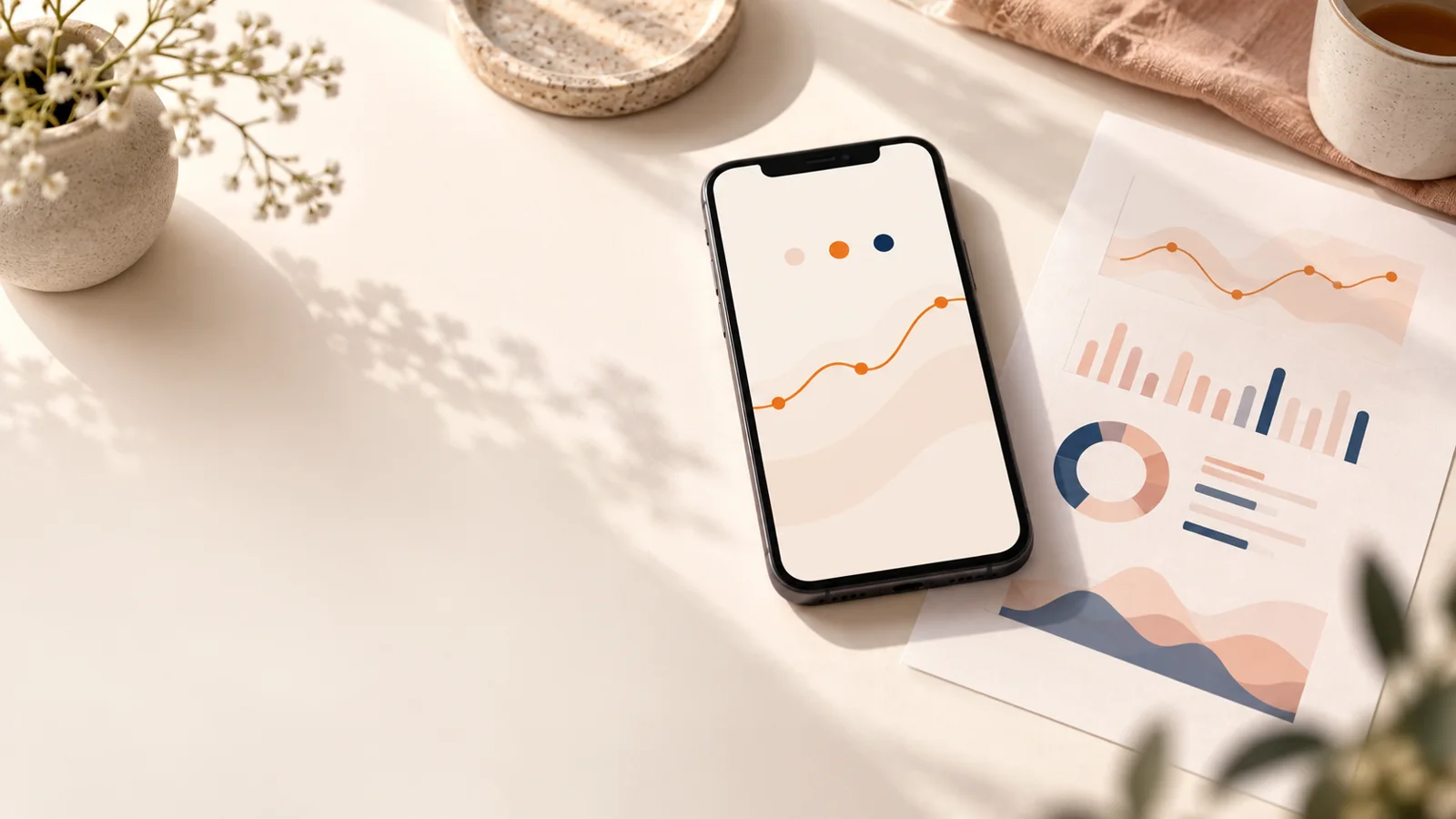
When you are not feeling your best, a small detail can matter: when a symptom started, whether it changed after a meal, or how often it interrupted your day. Those details are easy to lose between appointments. A symptom tracker gives you a place to record them while they are still fresh.
The goal is not to turn every sensation into a project. It is to build a clearer record with as little effort as possible. A short, consistent check-in can be more useful than trying to reconstruct weeks of good and bad days from memory.
Why a Simple Symptom Log Helps
Memory is imperfect, especially when days blur together. You may remember the worst day vividly but forget the quieter changes between episodes. Recording the same few symptoms over time lets you see a timeline instead of relying on a single impression.
A log can also make conversations more specific. Compare “my stomach has been bothering me lately” with “I noted bloating on four evenings this week, and I wrote down what I ate and how I slept.” The second description gives you and your clinician more to discuss. It does not prove what caused the symptom.
Tracking can be useful for many concerns: gut discomfort, headaches, pain, sleep, energy, mood, recovery, or a custom set of signals that matters to you. The right list is usually short enough that you will actually use it.
Consistency Beats a Perfect Entry
A tracker only helps if checking in fits real life. Baseline is built around a quick check-in: choose a tracking profile, score the metrics you care about on a clear 1–10 scale, and add a note when context matters. You can return to the same questions next time instead of rebuilding your journal every day.
Be clear about what each number means. For one metric, 10 may mean “more severe”; for another, 10 may mean “better.” Baseline labels that direction so a chart is easier to interpret later. A number is your own observation, not a clinical measurement.
Notes are useful when a score alone misses the story. A few words about meals, stress, medication changes, activity, or sleep may help you remember the day. You do not need to fill every field or invent a reason for every change.
Look for Questions, Not Diagnoses
Over time, a timeline and chart can make changes easier to notice. Perhaps discomfort rises on certain days, or energy improves after a routine changes. That is a prompt to ask a better question, not evidence that one event caused another. Symptoms often have more than one possible explanation.
If a pattern concerns you, bring it to a qualified professional. If a symptom is severe, sudden, or urgent, seek appropriate medical care instead of waiting to collect more entries. Baseline is a personal record, not a diagnostic or treatment tool.
Bring a Clearer Report to an Appointment
Appointments are short. A concise report can help you show what you tracked, when it happened, and which notes may be worth discussing. Baseline helps you prepare and print a report for a doctor appointment so you do not have to read through a long diary in the room.
A good report should preserve context. It should show the time span, the metric names and scale directions, and the entries behind any summary. If you have a question for your clinician, write it down beside the report. A report supports a conversation; it does not replace one.
Why Baseline
Baseline focuses on the part that is hardest to sustain: checking in quickly. Create a profile for the area you want to follow, use a starter template or your own metrics, log a few clear scores, and move on with your day. When you want the bigger picture, return to your timeline and charts.
Your core health log is designed to stay on your phone. You decide when to export or share a report. Optional Pro AI helps organize your entries into clearer summaries on your phone.
You do not need a perfect baseline on day one. Start with a few signals that matter to you, check in when you can, and let the record become more useful over time.
Medical note: This article is general information, not medical advice, diagnosis, or treatment. Speak with a qualified clinician about symptoms or health decisions.