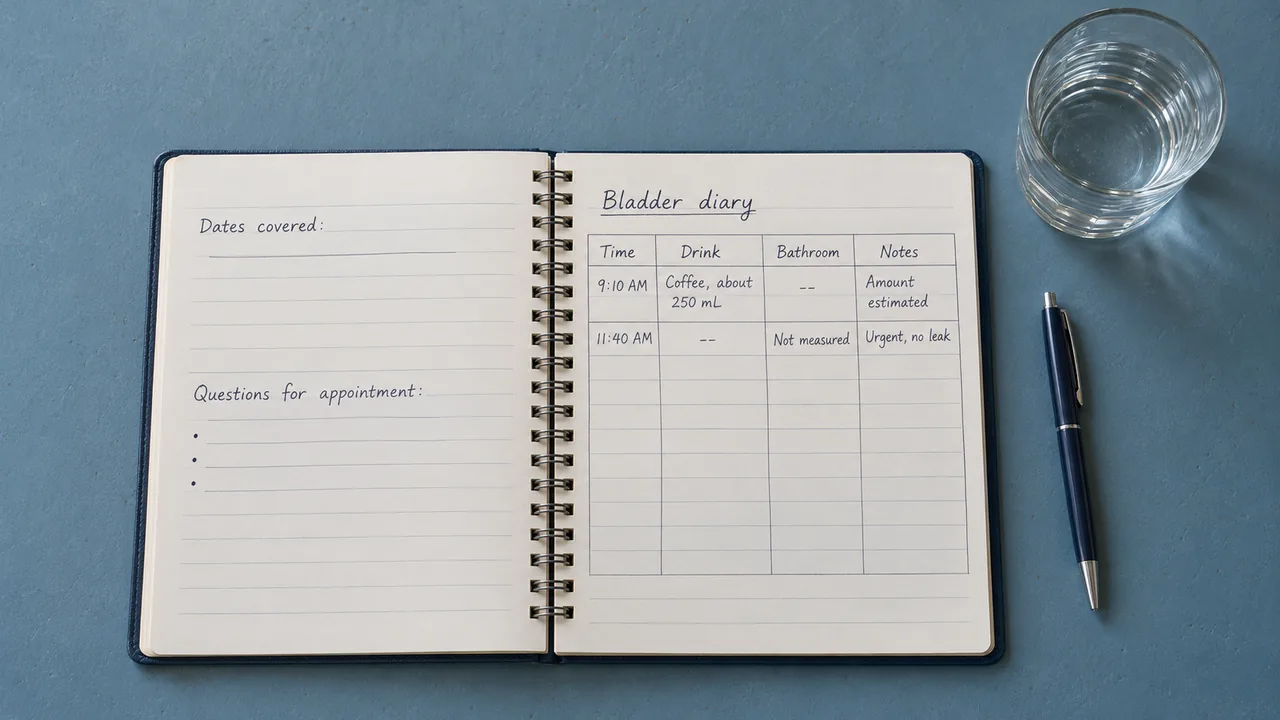
A bowel habit diary turns a general memory such as "my digestion has been different lately" into a dated record. Useful entries cover when you had a bowel movement, what the stool looked like, any urgency or discomfort, and relevant changes in your routine. The record can help you recall details and prepare questions for a clinician, but it cannot identify the cause or diagnose a condition.
What to Record After a Bowel Movement
Begin with what you observed. The National Institute of Diabetes and Digestive and Kidney Diseases (NIDDK) says clinicians may ask how often bowel movements occur, what stools look like, how long symptoms have lasted, and whether there is blood. It also suggests tracking bowel movements and stool appearance for several days or weeks before an appointment.
A practical entry can include:
- Date and approximate time. Exact timing is unnecessary if it makes the diary hard to maintain.
- Stool appearance. Use a short description such as hard pellets, formed and smooth, soft pieces, loose, or watery. Record unusual color as an observation.
- Ease of passing. Note whether the bowel movement was easy, difficult, or painful and whether you felt that stool remained afterward.
- Urgency. Record whether you had little time to reach a bathroom.
- Loss of control. Note any leakage or accident in factual terms.
- Related symptoms. Record abdominal pain, cramping, bloating, nausea, vomiting, fever, or dizziness when present.
- Visible blood or unusual material. Describe what you saw without trying to explain it.
These observations reflect questions clinicians may ask when assessing constipation or diarrhea. A diary does not replace an examination or testing. The NIDDK's constipation diagnosis guidance lists examples of information a clinician may request.
Describe Stool Without Overinterpreting It
You do not need technical language. Choose a small set of descriptions and use them consistently. For example, you could use "hard or lumpy," "formed," "soft," "loose," and "watery." A consistent vocabulary makes the diary easier to review.
If your clinician has given you a stool-form chart, record the category and add a few words in case you later forget what the number meant. A plain description can still provide useful information. Do not treat a category as a diagnosis.
Add Context Without Assuming a Cause
Context may help you and your clinician form better questions. Timing by itself does not prove that food, medicine, activity, or stress caused a bowel change. Record what occurred without calling it a trigger.
Food and Drink
A complete ingredient list is usually unnecessary. Note meals or drinks that were unusual for you, substantial changes in how much you ate or drank, or changes to your usual schedule. Follow your clinician's instructions if they have requested a detailed food record.
Medicines and Supplements
When relevant, record the name, dose, and time of medicines or supplements, including a recent start, stop, or dose change. Do not change a prescribed medicine based only on a diary pattern. See tracking possible side effects for a focused format.
Routine and Activity
Travel, routine changes, physical activity, eating patterns, fluid intake, and medicine changes may be relevant to a constipation history. Record changes that stand out. A note such as "travel day," "less active than usual," or "started supplement" is easier to maintain than a minute-by-minute log.
Record Frequency and Daily Impact
A weekly total does not show when bowel movements happened. Record each one so you can see whether several occurred close together or multiple days passed without one. You can also note difficult attempts or attempts that produced little stool when relevant to your concern.
Daily impact adds practical context. You might record:
- Waking from sleep to use the bathroom
- Leaving work, school, exercise, or an outing
- Staying near a bathroom because of urgency
- Changing or canceling plans
- Difficulty eating or drinking normally
- An accident or the need to change clothing
Describe what happened. "Left the meeting twice" conveys more information than "terrible day."
Use a Repeatable Check-In
Use the same short sequence for each entry:
- Record the date and approximate time.
- Describe the stool in a few words.
- Note urgency, difficulty, pain, or incomplete emptying.
- Add any related symptoms.
- Write one short context or impact note.
If you did not have a bowel movement that day, an entry saying "no bowel movement" preserves the timeline. Fill out entries soon after they happen when possible instead of reconstructing several days from memory. If you track pain, fatigue, sleep, or other symptoms too, decide whether one combined journal or separate profiles will be easier to review. The guide to choosing a symptom tracker or journal may help.
Prepare the Diary for an Appointment
Before an appointment, review the entries and prepare a short summary that includes:
- When the change began
- How often bowel movements occurred
- The stool descriptions you recorded
- Whether you experienced urgency, pain, difficulty, blood, or accidents
- Relevant changes involving medicines, supplements, travel, diet, fluids, or routine
- How the change affected normal activities
- Questions you want to ask
Clinicians may also ask about current and past medical conditions, weight changes, family history, medicines, supplements, and recent travel. The NIDDK's diarrhea diagnosis overview describes how clinicians may use medical history, an examination, and tests to investigate a cause.
For general visit planning, use the checklist for tracking symptoms before an appointment.
Know When to Seek Prompt Care
Do not wait to collect more entries before contacting a health professional about concerning symptoms. NIDDK advises prompt medical attention for black or tarry stool, red blood or pus, severe abdominal or rectal pain, frequent vomiting, dehydration symptoms, changes in mental state, or high fever. Its constipation guidance also lists rectal bleeding, blood in stool, constant abdominal pain, inability to pass gas, vomiting, fever, and unintentional weight loss as reasons to seek care promptly.
Guidance and thresholds differ for children, pregnant people, adults over 65, people taking antibiotics, people with weakened immune systems, and those with other medical conditions. Contact a qualified health professional for advice based on the person and situation.
Keep the Record Manageable
A concise diary you maintain is more useful than a detailed one you abandon after two days. Start with the fields that address your concern: time, appearance, ease or urgency, related symptoms, and one context note. Add detail when your clinician requests it or when it has a clear purpose.
If you prefer to keep the record on your phone, Baseline lets you create your own metrics, add notes, review a timeline, and prepare a text summary or CSV export from your check-ins. Core symptom entries stay on your phone, and you choose whether to save or share an exported copy. User-entered scores are personal observations, not clinical measurements.
Sources