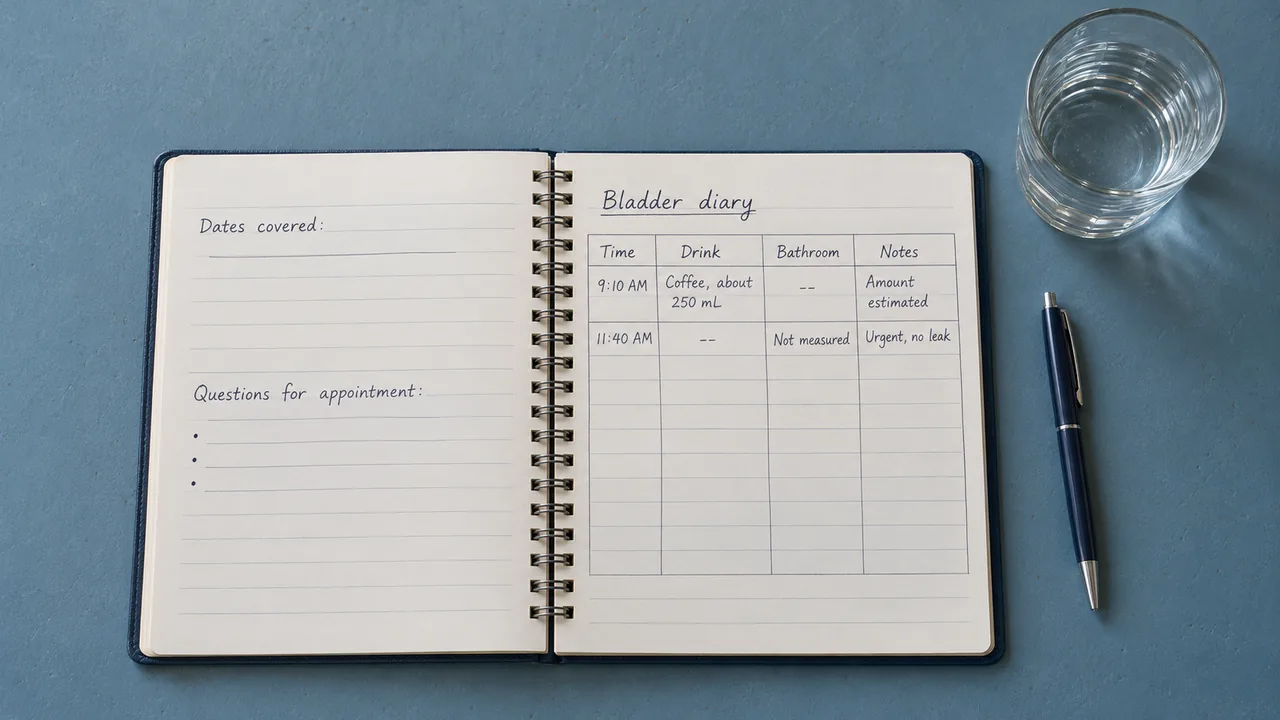
Headache details can blur once the pain has eased. A short diary preserves when a headache started, how long it lasted, what you felt, and what you took. That record gives you and a clinician a clearer timeline to review. It may reveal recurring context or useful questions, but it cannot identify a cause on its own.
Record the Basic Shape of Each Headache
Start with the date and the approximate start and end times. If the headache was already present when you woke up, write that instead of guessing when it began. Note where you felt it, such as one side, both sides, behind an eye, across the forehead, or around the neck.
Describe the sensation in your own words. You might write pressure, throbbing, tightness, stabbing, or a steady ache. A personal 1-10 score can help you compare entries when you use the scale consistently. Treat that number as your observation, not a clinical measurement.
Add what the headache changed. Did you keep working, need a quiet room, cancel an activity, or wake during the night? Daily impact often gives a score more useful context.
Note Symptoms That Happened at the Same Time
Record other symptoms without trying to label the headache yourself. These may include nausea, vomiting, dizziness, neck discomfort, or sensitivity to light, sound, or smell. If you noticed a visual change, tingling, trouble finding words, or another unusual experience, describe what happened and how long it lasted.
Use plain language rather than a diagnosis you have not received. "Bright zigzag line in the left side of my vision for about 15 minutes" is more specific than writing "aura" if you are unsure what the event was.
Write Down Medicines and Timing
If you took a medicine, use the exact name, dose, and time from the label or your instructions. Record when you next checked the headache and what had changed. Include any additional dose only as it actually happened.
Do not change a dose or repeat a medicine to test whether it affects the headache unless a qualified professional has told you to do so. If you are tracking a new medicine or a recent dose change, the guide to possible medication side effects explains how to keep the medicine timeline separate from assumptions about cause.
Add Context Without Recording Everything
The American Migraine Foundation recommends keeping a headache journal manageable. Some people record only headache days. Others add a brief daily check-in after a treatment change or during a period their clinician wants to review.
Choose a few details you can track consistently. Sleep, meals, hydration, caffeine, physical activity, stress, and menstrual timing may be relevant context for some people. Record what happened without deciding that one detail caused the headache. A single overlap can be coincidence, and several factors can change on the same day.
If sleep is one of the details you want to compare, use the same bedtime, wake time, and sleep-quality fields described in our sleep and symptom diary guide. A short repeatable entry is easier to review than a different set of details every day.
Review the Diary Before an Appointment
Look across the entries for a few concrete facts: the number of headache days, the usual duration, the range of severity scores, symptoms that often arrived with the pain, medicines used, and activities you could not complete. Also note any clear change from your usual pattern.
The NHS notes that a headache diary may help you work out possible triggers. Treat a pattern as a question to discuss, not proof. Bring a short summary and the entries that support it. Our guide to tracking symptoms before a doctor appointment can help you turn the diary into a concise conversation.
Know When the Diary Should Wait
A diary is useful for review, but new or alarming symptoms need timely care. MedlinePlus advises immediate medical help for a sudden, severe headache, a headache after a blow to the head, or a headache with a stiff neck, fever, confusion, loss of consciousness, or pain in the eye or ear. The NHS headache guidance also lists situations that need urgent assessment. Follow local emergency guidance rather than delaying care to finish an entry.
Use Baseline for a Simple Headache Log
Baseline lets you create a tracker with the fields you want to repeat, such as headache severity, light sensitivity, nausea, or daily impact. You can add a personal 1-10 score and a note with the start time, end time, medicine timing, and context.
Timelines and charts help you review recorded changes. Baseline can also prepare a text summary or CSV export from your check-ins. You decide whether to save or share a copy, and your core symptom entries stay on your phone unless you choose to export or share them. See the Baseline symptom tracker page for current app details and the privacy policy for information about entries, exports, and backups.
Sources